Hydration and Gym Performance: Does Your Bottle Actually Matter?
Most athletes think carefully about what they drink. Almost nobody thinks about what they drink from.
Hydration's role in performance is well understood. Even mild dehydration, as little as 1 to 2% of body weight in fluid loss, measurably affects strength output, endurance, concentration, and recovery speed.⁷
Gym-goers who train seriously already know this. They carry water everywhere. They track intake. They hydrate before, during, and after sessions.
What most of them haven't thought carefully about is the vessel that water's spending its time in before it reaches them.

How Plastic Affects What You're Drinking
Taste affects compliance:
Plastic absorbs odour and residue at a microscopic level. Over time, even cleaned plastic vessels develop a flavour that transfers to whatever's inside. It's well documented enough that it features in patent literature as a primary driver of consumer preference toward stainless alternatives.⁸ If water tastes like plastic, people drink less of it. Less intake means measurable performance consequences.
Temperature affects microplastic shedding:
Plastic sheds more material as temperature increases. A bottle left in a car on a warm day, or filled with liquid that's even slightly warm, accelerates the rate at which plastic polymers break down and migrate into the drink.⁹
Every refill is another contact event:
A serious gym-goer might refill their bottle 6 to 8 times across a training day. Each fill represents another contact event between the liquid and the plastic surface, adding up across the weeks, months, and years of consistent training.
What Stainless Steel Changes
Taste neutrality:
Stainless steel doesn't absorb flavour, odour, or residue. Water stored in a stainless steel vessel tastes like water. Consistently. Which means people who switch tend to drink more of it without consciously trying to.
Temperature retention:
The thermal mass of stainless steel keeps liquids cooler for longer than plastic, which is relevant both for taste preference and for the temperature-dependent material shedding issue above.
No accumulation over time:
Unlike plastic, stainless steel doesn't degrade in ways that transfer into the liquid over repeated use. The vessel performs the same on day 1,000 as on day 1.

The Simplest Performance Upgrade Nobody Talks About
Most hydration advice focuses on how much to drink and when. The vessel is rarely part of the conversation, because for most of the history of modern fitness, plastic was the only option at scale.
It's not anymore.
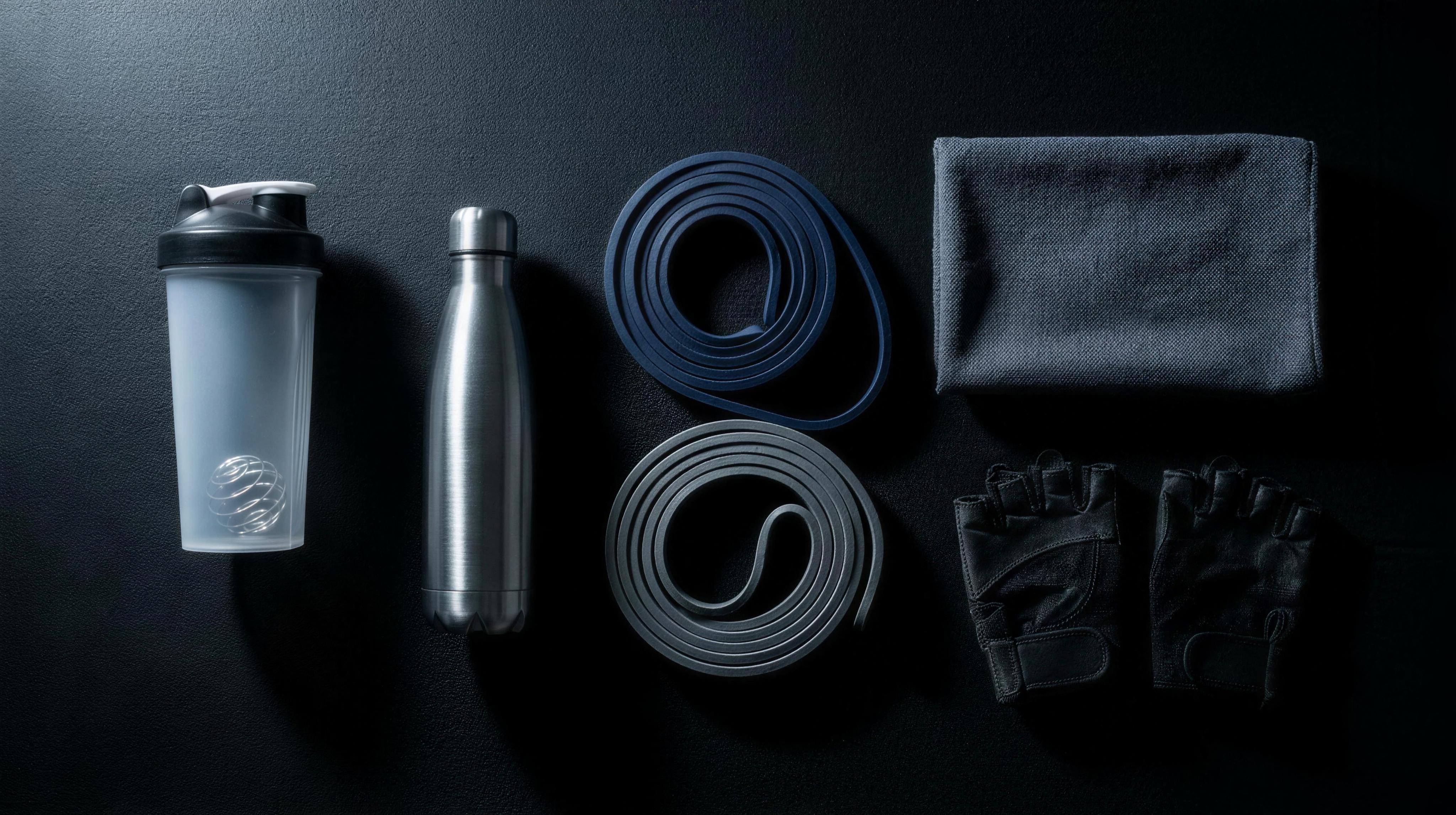
Switching your shaker and your water bottle to stainless steel won't add kilos to your lifts overnight. But given that hydration directly affects output, and that the vessel material directly affects both hydration compliance and what you're ingesting with each sip, it's a variable worth closing.
Sources
- PMC, 2012. "Educational intervention on water intake improves hydration status and enhances exercise performance in athletic youth." Confirmed that improved hydration status produces measurable improvements in endurance performance, supporting the well-established relationship between hydration and athletic output. URL: https://www.ncbi.nlm.nih.gov/pmc/articles/PMC3468721/
- US Patent Office documentation referencing peer-reviewed research on plastic taste in hydration vessels as a primary driver of consumer preference toward stainless alternatives. URL: https://image-ppubs.uspto.gov/dirsearch-public/print/downloadPdf/10806239
- Massahi, T. et al. Scientific Reports, 2025. Temperature-dependent release of endocrine-disrupting chemicals from plastic containers confirms heat as a primary driver of chemical migration from plastic into liquid. URL: https://www.nature.com/articles/s41598-025-05036-7