Your Gym Bag's Dirtiest Items, Ranked by Microplastic Exposure
Most gym bags are full of plastic. Most people have never thought about it.
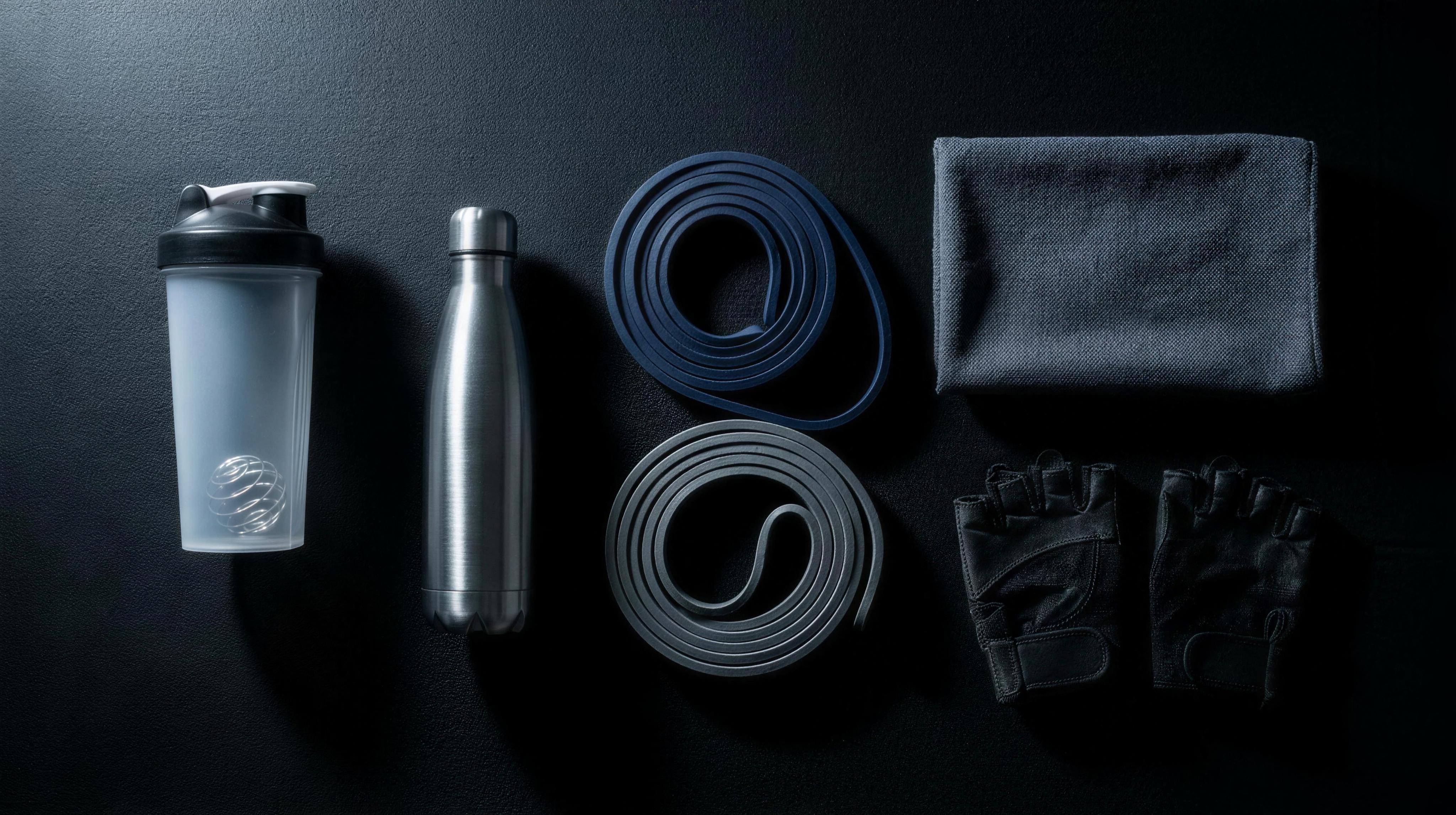
Shaker bottle. Water bottle. Resistance bands. Synthetic towel. Polyester gym bag. Nylon activewear.
Every one of those items is either made from plastic or sheds it, often both. The only question is how much, how often, and how directly it's getting into your body.
Here's every item in your gym bag ranked by microplastic exposure risk, from most to least, so you can work out where to focus first.

1. Your Shaker Bottle — Highest Risk
Why it ranks first: Direct food contact, multiple times daily, with repeated mechanical stress (shaking), heat exposure, and a plastic agitator adding abrasion from inside. This is the highest-frequency plastic ingestion contact point for most people who train.
The fix: 100% stainless steel shaker with a food-grade silicone seal. Removes the variable entirely. Only 100% Plastic Free Shaker
2. Your Water Bottle — High Risk
Why it ranks second: Same material concerns as the shaker, but typically larger volume and longer liquid dwell time. Refilled and reused throughout the day with no agitation but constant surface contact between plastic and liquid.
The fix: Single or double wall stainless steel, stainless or silicone lid mechanism. Same principle as the shaker.
3. Your Synthetic Gym Towel — High Risk (Different Route)
Why it ranks third: Synthetic microfibre towels shed between 640,000 and 1,500,000 microplastic fibres per wash cycle.¹⁰ Direct skin contact when warm and sweating increases dermal absorption of the chemicals carried on those fibres. High exposure, different route than ingestion.
The fix: Organic cotton or bamboo towel. Less technical feel, zero microplastic shedding.
4. Your Activewear — Medium-High Risk
Why it ranks fourth: Polyester, nylon, and spandex activewear sheds microplastic fibres continuously during wear and washing. Skin is more absorbent during exercise when warm and sweating, increasing dermal exposure.¹¹ High surface area of contact but less direct than ingestion.
The fix: Natural or low-synthetic fabrics where possible. Harder category to fully solve given performance requirements.
5. Your Resistance Bands — Medium Risk
Why it ranks fifth: TPE and synthetic rubber resistance bands shed microplastics under the repeated stretching and friction of use. Contact is with hands and skin rather than direct ingestion, and exposure is lower frequency than shaker use.
The fix: Natural latex or rubber bands. Widely available, comparable performance, longer lifespan.
6. Your Gym Bag — Lower Risk
Why it ranks sixth: Synthetic nylon or polyester shells shed fibres, but the exposure route (touching the outside of a bag) is indirect. Still contributes to the broader microplastic burden in your environment.
The fix: Canvas or waxed cotton with metal hardware. Least urgent swap on this list.

Start With Number One
You don't need to replace everything at once. The ranking exists precisely so you know where the return is highest for the least effort.
The shaker is number one because it combines the worst material risk with the highest frequency of use and the most direct route to ingestion. Everything else on this list matters, but none of them come close to that combination.
Sources
- Zambrano, M.C. et al. "The contribution of washing processes of synthetic clothes to microplastic pollution." Scientific Reports, 2019. Found that synthetic garments release between 640,000 and 1,500,000 microplastic fibres per wash cycle depending on garment type and construction. URL: https://www.ncbi.nlm.nih.gov/pmc/articles/PMC6488573/
- Urban Wellness, March 2026. Citing research showing that synthetic activewear (polyester, nylon, spandex) sheds microplastics during wear and washing, with skin absorption increasing during exercise when skin is warm and moist. URL: https://www.urbanwellnessmag.com/blog/nontoxic-activewear