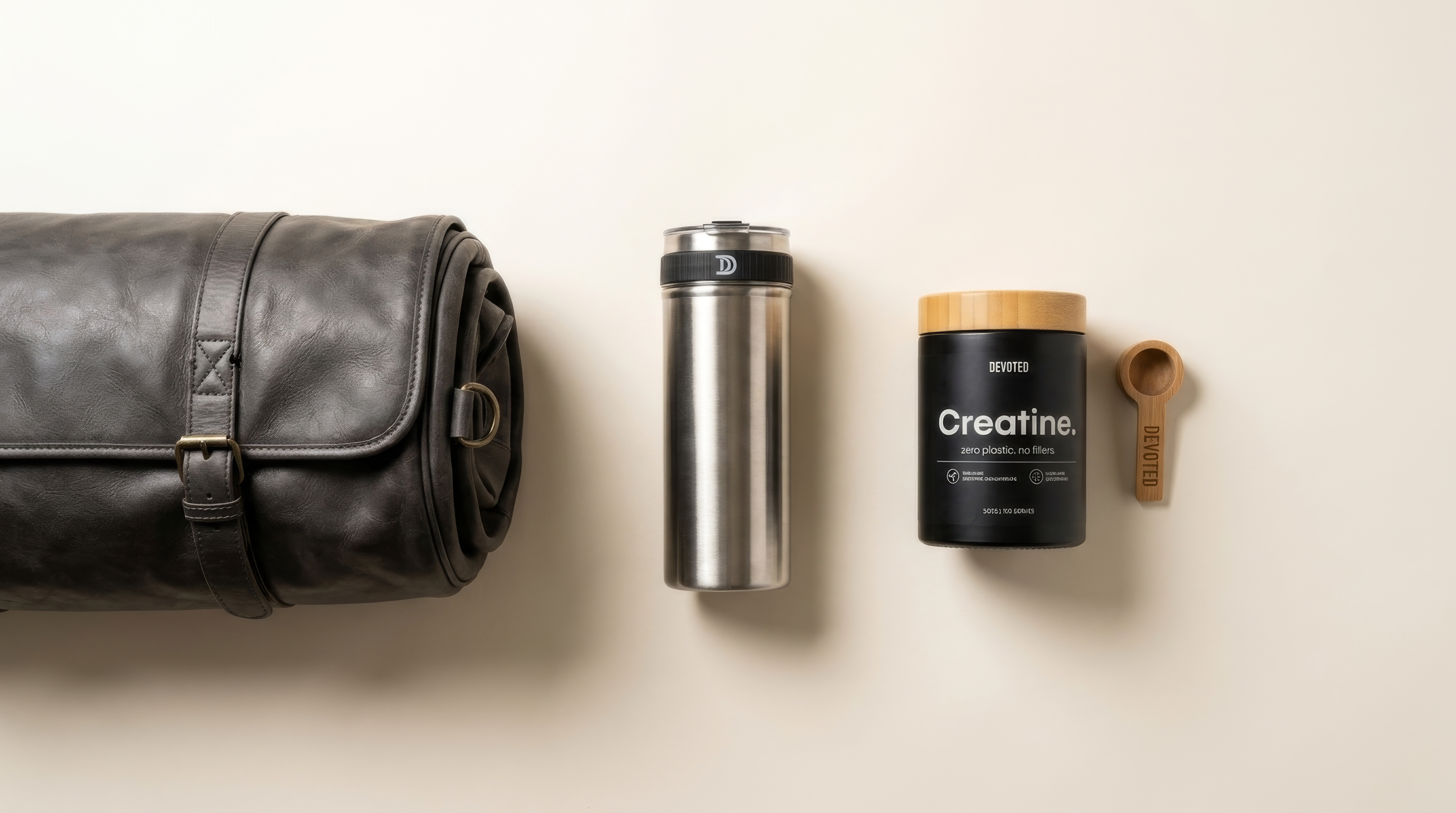
The Morning Routine Upgrade Nobody in Fitness Talks About
Most serious gym-goers have their morning dialled in. Almost nobody has thought about this part.
Wake time. Hydration. Pre-workout nutrition. Supplement timing. Getting to the gym at the right point in the day for their training goals.
The detail-oriented gym-goer has all of this mapped out. They've read the research on cortisol curves and training timing. They track their sleep. They've optimised everything they can think of.
There's one part of the morning routine that almost none of them have looked at yet.

The First 60 Minutes
For most gym-goers, the first hour of the day involves more plastic contact than almost any other part of their routine.
The protein shake:
Scooped from a plastic tub, with a plastic scoop, mixed in a plastic shaker. That's three distinct plastic-to-food contact events before the drink is even consumed, at the start of the day when the body is absorbing nutrients from an overnight fast.
The pre-workout drink:
Same vessel. Same contact. If someone uses a pre-workout in addition to protein, that's the same plastic shaker being refilled and used again, often within the same 30-minute window.
The water bottle:
Filled, carried, sipped from in the car, in the gym, at the desk. A full day's worth of fluid contact beginning in the first hour, all from the same plastic vessel.
The creatine:
Scooped from a plastic tub into whatever is being mixed. Creatine's hydrophilic nature means it interacts more actively with its container than many other powders, and most people store a creatine tub for months.
Why the Morning Specifically
The body's absorption state after an overnight fast makes the quality of what's consumed in the first meal and fluid intake of the day matter more than at almost any other point. It's not a stretch to suggest that the vessel material in that window is worth paying the same attention to as the nutritional content of what's inside it.
Fasted absorption is more complete:
Nutrients consumed in a fasted state tend to be absorbed more efficiently. If there are microplastics or leaching chemicals present in that first shake, the same absorption efficiency applies to them.
The window is habitual:
Morning routines are by definition repetitive. The same vessels, the same contact, the same exposures, every morning, compounding across weeks, months, and years of consistent training.
The Upgrade
The upgrade isn't complicated. It's not a new supplement protocol or a training methodology.
It's switching the shaker and the water bottle to stainless steel. It's replacing the plastic scoop with a steel or wooden one. It costs a fraction of what most gym-goers spend on supplements in a month and it removes the highest-frequency plastic contact from the most important nutritional window of the day.
The serious gym-goers reading this have already optimised almost everything else. This is the one that's been sitting unaddressed.