Hydration Habits That Are Costing You Gains (And It's Not How Much You Drink)

Everyone knows hydration affects performance. Almost nobody has thought about the vessel.
The hydration conversation in fitness is almost entirely about volume. Drink more. Drink earlier. Drink during, not just after. Time your intake around sessions.
It's the right conversation. Even mild dehydration of 1 to 2% of bodyweight affects strength output, endurance, and cognitive function during training. The research on that is settled.
What nobody is talking about is what the vessel you're drinking from is contributing to every sip you take. And for people who drink from plastic bottles and shakers multiple times a day, that's a variable worth paying attention to.

The Taste Problem Nobody Admits
A controlled study testing 100 users across six leading hydration systems found that at least 90 out of 100 users detected a plastic taste in every plastic vessel tested. The stainless steel system received no reports of plastic taste from any user.¹
That matters for performance for a simple reason: taste affects how much people drink.
If water tastes like plastic, people drink less of it:
The effect is subtle and largely unconscious, but it's real. People who switch from plastic to stainless steel consistently report drinking more water without consciously trying to, because the absence of plastic taste removes a sensory friction point that was suppressing intake without them realising it.
A litre of water from a plastic bottle contains on average 240,000 microplastic particles:²
Most are nanoplastics, small enough to cross cell membranes and enter the bloodstream. The interaction between liquid and plastic surface increases with heat, time, and mechanical stress, all conditions a gym shaker experiences daily.
75% of people drink less than 1.5 litres of water per day:³
A 2024 study on hydration habits found the majority of adults fall below recommended daily fluid intake. If plastic taste is even a minor contributor to that pattern for gym-goers, the performance implications compound over weeks and months of consistent under-hydration.

The Variable Most Athletes Haven't Optimised
You've probably already thought carefully about what you drink (water quality, electrolytes, timing) and how much you drink. The vessel is the one part of the hydration equation that almost nobody has addressed.
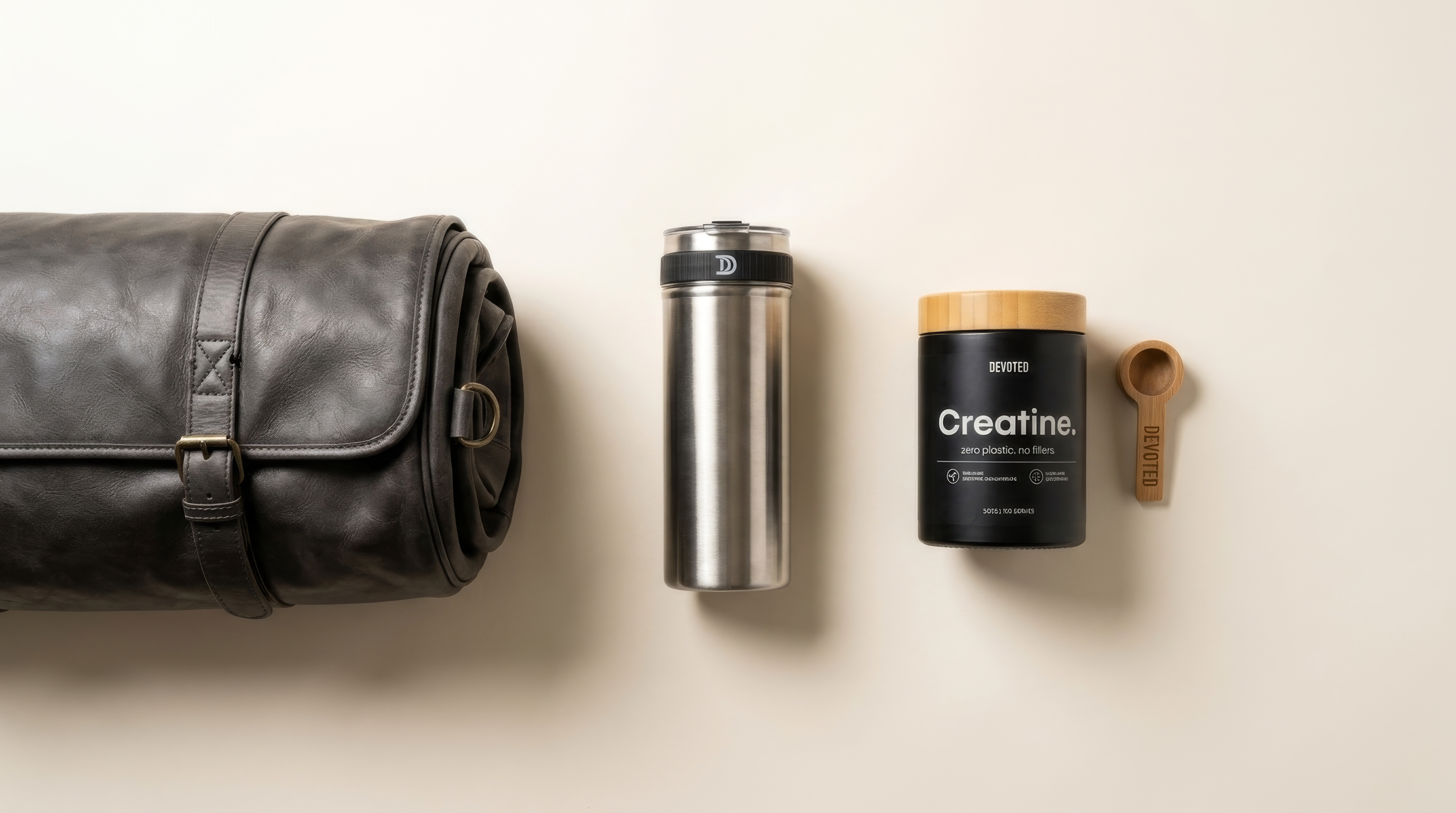
Switching to a stainless steel shaker and water bottle removes the plastic taste issue, removes the microplastic ingestion variable from your daily fluid intake, and gives you a vessel that performs identically on day one and day one thousand.
It's not the biggest lever in your training. But it's one of the easiest to pull, and it's currently sitting unoptimised for most people who are otherwise serious about everything they put in their body.
Sources
- US Patent documentation citing a controlled study of 100 users across six leading hydration systems. Every plastic system received plastic-taste feedback from at least 90 of 100 users. The stainless steel system received zero reports of plastic taste. URL: https://image-ppubs.uspto.gov/dirsearch-public/print/downloadPdf/10806239
- UPMC HealthBeat, March 2026. Citing a 2024 Proceedings of the National Academy of Sciences study finding an average of 240,000 tiny plastic particles per litre of bottled water, with nanoplastics comprising 90% of the total. Also cites a 2025 Journal of Hazardous Materials review confirming that opening and closing caps and squeezing bottles releases microplastics and nanoplastics into the water. URL: https://share.upmc.com/2026/03/plastic-water-bottles-safe/
- PubMed, 2024. "A survey on hydration and use of plastic water bottles among Italian health sector workers." Found that 75% of workers surveyed reported drinking less than 1.5 litres of water per day, with perceived need for alternative drinking water sources identified as a key motivating factor for change. URL: https://pubmed.ncbi.nlm.nih.gov/38742370/