Creatine, Protein and the Plastic Problem Nobody's Talking About
You optimise everything. Except this.
You track your macros. You time your protein intake. You've researched which creatine form absorbs best and whether to cycle it. You spend serious money on quality supplements because you understand that inputs determine outputs.
Then you scoop your protein out of a plastic tub, mix it in a plastic shaker, and drink it down without a second thought.
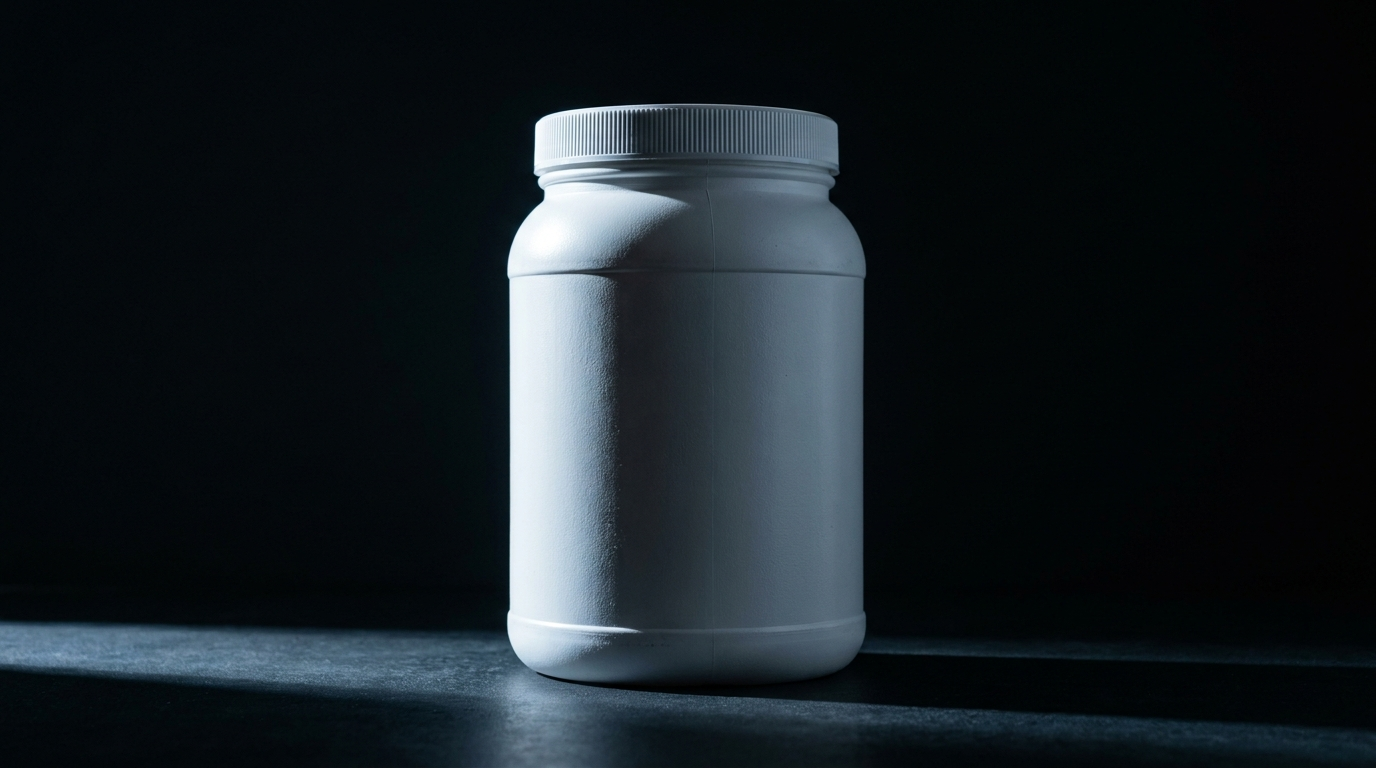
The supplement industry has done a thorough job of making you think about what's in the tub. Nobody's talking about what the tub itself might be putting in.

The Testing Gap Nobody's Closing
Here's something worth knowing. In 2024 and 2025, the Clean Label Project ran 35,862 individual contamination tests across 160 of the top-selling protein powders, covering around 83% of the market. They tested for lead, cadmium, arsenic, mercury, BPA, BPS, PFAS, and pesticides.
Not one of those 35,862 tests measured microplastics.¹
The industry tests for what it's legally required to test for:
Heavy metals and certain chemicals have regulatory thresholds. Microplastic contamination from packaging does not, which means there's no commercial incentive to look for it.
The plastic tub problem is a packaging problem, not a formula problem:
Most protein and creatine powders sit in high-density polyethylene (HDPE) plastic tubs for weeks or months at a time, in warehouses, on trucks in summer heat, and on warm shelves in customers' homes. Heat is one of the three primary drivers of plastic degradation and chemical migration.²
The scoop makes it worse:
The plastic scoop that comes with every tub creates direct, repeated mechanical contact between plastic and powder with every serving, exactly the kind of abrasive interaction that accelerates microplastic shedding from plastic surfaces.³
Creatine Specifically
Creatine monohydrate is one of the most studied, most effective, and most straightforward supplements available. It works. The science is settled. Which makes the packaging question more pointed, not less.
Creatine is hydrophilic:
It draws moisture, which means it interacts more actively with its container than a dry powder that repels it. More moisture contact means more surface interaction with the plastic it's stored in.
It's usually stored long-term:
A creatine tub often lasts months, sitting in the same plastic container through seasonal temperature changes, significantly longer contact time than a protein tub that might turn over in a few weeks.
The mixing vessel matters as much as the tub:
If creatine or protein is going into a plastic shaker, the contamination question doesn't end at the tub. It continues in the vessel you're mixing it in, twice a day, every day.

The Shaker Is the Daily Variable
Most people replace a protein tub every 2 to 4 weeks. They might use the same plastic shaker for 6 months. The tub is a long dwell time problem. The shaker is a high frequency problem.
Frequency compounds exposure:
Two shakes a day, every day, from the same plastic vessel adds up to more repeated contact than almost any other item in your nutrition routine.
Mechanical stress accelerates shedding:
Shaking introduces the kind of repeated abrasion that degrades plastic surfaces faster than passive storage, meaning your shaker is likely contributing more microplastic load per use than the tub your powder comes from.
You can't control the tub yet:
Until supplement brands start packaging in glass, stainless steel, or genuinely inert materials (and a small number are starting to), the tub is largely outside your control at the point of purchase.
The shaker isn't.
What You Can Actually Control Right Now
Switch the shaker first:
It's the highest frequency plastic contact in your entire supplement routine. A stainless steel shaker with a food-grade silicone seal removes that variable from every single serving, immediately.
Replace the plastic scoop:
The scoop that comes with every tub creates direct, repeated mechanical contact between plastic and powder with every serving. Swap it for a stainless steel or wooden measuring scoop. Small change, daily impact.
Be sceptical of "plastic-free" packaging claims on supplements:
Paper and foil pouches are often marketed as the eco-alternative to plastic tubs, but the majority are still lined with a plastic film on the inside, meaning the powder is in direct contact with plastic regardless of what the outer layer looks like. Until the supplement industry standardises genuinely inert packaging, the vessel you mix in remains the variable most worth controlling.
Something is coming from DEVOTED:
We've identified a gap in this space that nobody's filling properly. We're working on something to close it, built to the same standard as everything else we make. We're not ready to say more than that yet, but if you've made it this far in this article, you'll want to be first to know when we do.
Watch this space.

The Bottom Line
The supplement industry is meticulous about what goes into the formula and almost entirely silent about what the packaging puts in. That gap isn't going to close on its own.
You can't fix the tub today. You can fix the shaker.
Sources
- Evident Health, April 2026. "Microplastics in Protein Powder: The Testing Gap Nobody's Closing." Documents that the Clean Label Project's 2024 to 2025 protein report ran 35,862 individual contamination tests across 160 top-selling protein powders without testing for microplastics, representing a near-total testing gap in the supplement industry. URL: https://www.getevident.co/supplements/protein/protein-powder-microplastics
- Massahi, T., Omer, A.K., Kiani, A. et al. "A simulation study on the temperature-dependent release of endocrine-disrupting chemicals from polypropylene and polystyrene containers." Scientific Reports 15, 19318 (2025). Confirmed that heat is a primary driver of chemical migration from plastic food containers, with release increasing at each elevated temperature point tested. URL: https://www.nature.com/articles/s41598-025-05036-7
- Zimmermann, L., Geueke, B., Parkinson, L.V. et al. "Food contact articles as source of micro- and nanoplastics: a systematic evidence map." npj Science of Food 9, 111 (2025). Found that mechanical stress from repeated everyday handling is a primary driver of microplastic release from food contact materials, with shedding intensifying with repeated use. URL: https://www.nature.com/articles/s41538-025-00470-3
Supporting: ScienceDirect, 2026. "Heavy metal and microplastic exposure from sports protein supplements: integrated health risk modeling and scenario analysis." Found detectable levels of heavy metals and raised integrated health risk concerns around microplastic exposure from protein supplement packaging. URL: https://www.sciencedirect.com/science/article/abs/pii/S0013935126003166